
F1’s Midseason Reality Check
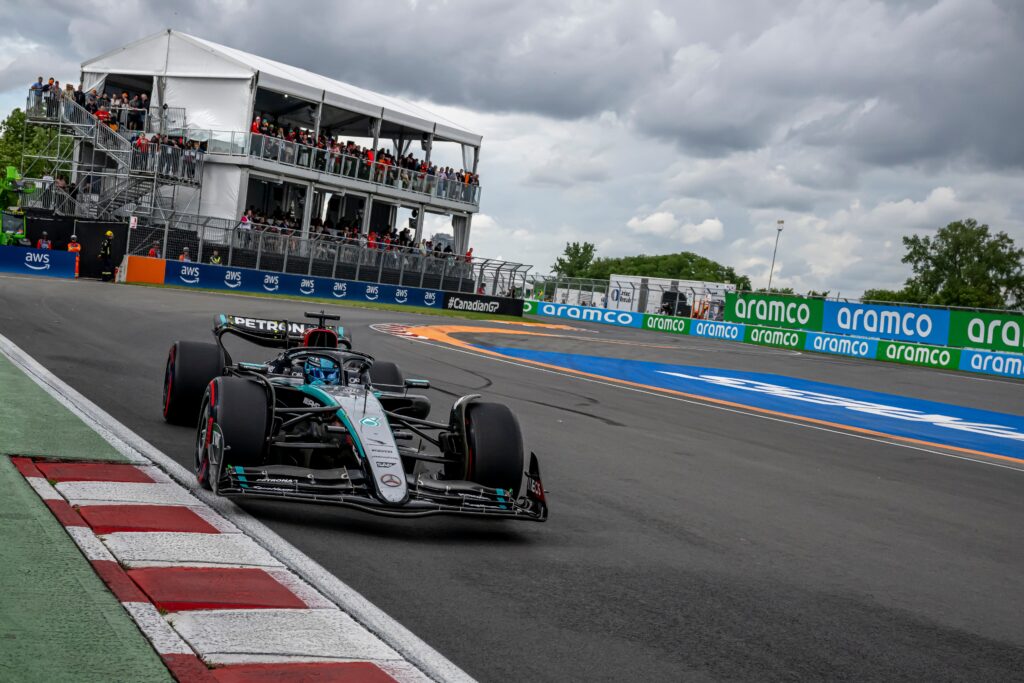
Four race weekends into the Formula 1 season, the biggest takeaway is not who is leading the championship. It is how quickly the entire grid feels like it is changing beneath the sport itself.
The future is no longer arriving slowly. It is already here.
Veteran drivers are being pushed harder than expected. Team leaders suddenly look uncomfortable. Young talent is no longer “developing” quietly in the background. They are winning races, taking headlines, and forcing teams to make uncomfortable decisions earlier than planned.
At the center of all of it sits Mercedes.
George Russell entered the season as a legitimate championship favorite. Many expected this to finally become his year. He had the experience, the stability, and a car capable of fighting at the front under the new regulations. On paper, everything aligned.
Then Kimi Antonelli started winning.
Not just surviving. Not just impressing for a rookie. Winning.
The shift inside Mercedes became noticeable by the third race weekend. The energy around the team changed almost instantly. Antonelli’s back to back victories created a level of excitement that felt impossible to ignore, while Russell quietly faded into the background despite still performing at a high level himself.
That is what makes the situation so fascinating.
George Russell is not driving poorly.
In fact, he has adapted well to the new regulations and still looks like one of the strongest all around drivers on the grid. The problem is that Antonelli’s rise has happened faster than anyone expected. Russell was supposed to be the future of Mercedes after Lewis Hamilton’s departure, but suddenly the future may already be sitting in the other garage.
The uncomfortable part is how visible it feels.
Russell has seemed quieter this season. Less animated in photos, less emotionally present in big moments, and noticeably absent from the emotional center of the team. Whether intentional or not, Mercedes already feels emotionally invested in Antonelli long term.
And honestly, they probably are.
Toto Wolff has never hidden how highly he views Antonelli. Even before the season began, it felt obvious Mercedes saw him as their next generational talent. That alone creates pressure, especially for a driver like Russell who was expected to lead the team into its next era.
Now the question becomes much bigger than this season.
If Antonelli continues winning and Russell cannot convert a championship caliber car into a title run, how long does Mercedes continue viewing George as untouchable? In Formula 1, timing matters almost as much as talent, and Russell may be experiencing the worst possible timing of his career.
Because Antonelli no longer feels like “the future.” He already feels like the present.
That same theme exists throughout the grid.
Oliver Bearman has rapidly become one of the biggest surprises of the season. Haas is not a dominant car. At best, it is a midfield machine capable of stealing results when opportunities appear. Yet Bearman continues finding those opportunities with a level of maturity and confidence that looks far beyond his experience level.
What makes Bearman impressive is not just raw speed. It is his awareness. He sees openings developing before other drivers do, takes risks confidently, and more importantly, makes those risks work.
Meanwhile, Esteban Ocon looks completely outmatched.
This does not feel like a temporary slump or bad luck situation. It feels like the uncomfortable realization that some veteran drivers simply are not keeping pace with the level of talent entering Formula 1 right now.
That may sound harsh, but Formula 1 has never been forgiving.
Ocon is not mentally broken. He is simply being exposed by a younger teammate performing at a higher level. If that trend continues, it becomes difficult imagining many teams fighting to keep him on the grid long term. Quite honestly, some teams may already prefer taking chances on younger drivers with upside rather than veterans who have seemingly plateaued.
The rookie label itself almost feels outdated already.
Antonelli and Bearman do not drive like rookies anymore. They already carry themselves like established Formula 1 drivers. The adjustment period fans usually expect from young talent feels dramatically shortened in this new era.
Ironically, Liam Lawson may be the only young driver still visibly carrying that “unfinished rookie” feeling, despite arguably not even being a true rookie anymore. The mistakes continue happening too frequently, and compared to the composure shown by Antonelli and Bearman, the contrast becomes difficult to ignore.
And while young drivers are reshaping the grid, Max Verstappen continues reshaping the conversation around the sport itself.
Max has always been influential, but this season feels different.
Usually Verstappen keeps his opinions relatively controlled unless directly asked. This year, his frustrations seem more visible and more frequent. Whether discussing regulations, racing philosophy, or the direction Formula 1 is heading technologically, Verstappen increasingly sounds like a driver frustrated not just with performance, but with the politics surrounding the sport.
Some of that frustration clearly comes from Red Bull’s decline.
This is not a healthier grid because Red Bull suddenly became weaker. It is simply a decline in performance, and Verstappen knows it. But his frustrations extend beyond the car itself. To Verstappen, Formula 1 increasingly feels like a sport fighting over identity.
The FIA certainly is not helping.
The current regulation era already feels unstable, and now conversations about potentially returning V8 engines by 2030 or 2031 only add more confusion to Formula 1’s long term vision. Fans constantly romanticize older eras of the sport, particularly the screaming V10 and V8 years, but modern Formula 1 was never realistically going to remain frozen in time.
This is simply a different era.
Hybrid systems, electrical deployment, energy recovery systems, and boost strategies are part of modern racing now whether traditionalists like it or not. Fans may miss older engines emotionally, but technologically, Formula 1 has already evolved beyond that world.
And honestly, that evolution may be happening faster than many teams can handle.
No organization represents that failure more than Aston Martin.
At this point, Aston Martin is unquestionably the biggest disappointment on the grid.
The collapse did not happen overnight either. This has been a steady decline stretching across multiple seasons despite massive investment, major staffing changes, and endless promises about becoming a championship contender.
Now they cannot compete anywhere.
Qualifying pace is missing. Race pace is missing. Reliability is questionable. Even Cadillac, a brand new operation entering Formula 1, already looks more organized at times despite not even being particularly competitive themselves.
That should terrify Aston Martin.
Fernando Alonso deserves credit for continuing to fight despite the situation around him. He clearly still wants to race and still believes he belongs on the grid. But the larger structural issues inside Aston Martin feel impossible to ignore, especially with Lance Stroll continuing to occupy one of the seats.
Stroll remains one of the most polarizing drivers in Formula 1 because there is still a belief that some of his struggles stem from confidence, motivation, and the environment around him rather than pure lack of ability. But regardless of the explanation, the results simply are not good enough compared to the rest of the grid.
And when a team’s feedback structure centers around a struggling driver, development itself becomes questionable.
That is the reality Aston Martin now faces.
Four weekends into the season, Formula 1 already feels caught between eras.
The old guard still exists, but the next generation no longer looks intimidated by them. Teams are adapting in real time. Regulations remain chaotic. Drivers are openly frustrated. Fans are arguing over whether Formula 1 should move forward technologically or chase nostalgia.
Meanwhile, the young drivers are simply winning races.
That may be the biggest reality check of all.