
Firestone Grand Prix of St. Petersburg
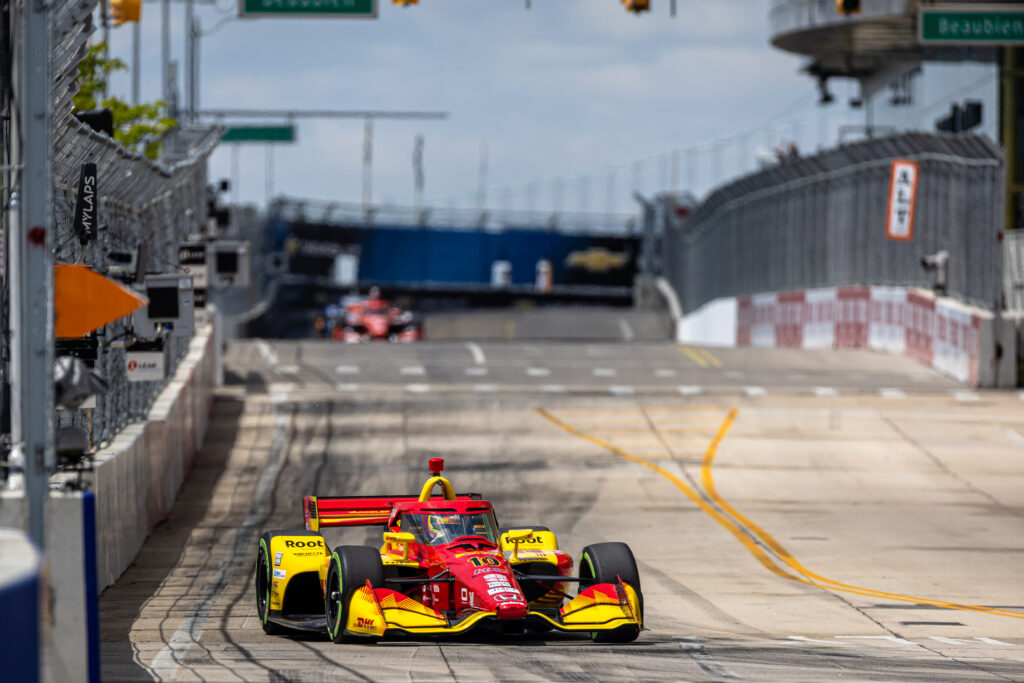
The 2026 season of the NTT IndyCar Series opened the same way last year often felt: with Álex Palou in complete control.
Palou didn’t just win Sunday’s race on the streets of St. Petersburg, he delivered a performance that will now sit in the record books. His margin of victory was 12.4 seconds, officially the largest winning gap in the history of this event.
On a temporary street circuit known for tight walls, strategy swings, and compressed finishes, that number carries weight.
This wasn’t survival.
It wasn’t luck.
It was domination.
A Milestone Win in More Ways Than One
The victory marked:
- Palou’s 20th career win
- In just 99 career starts
- Back-to-back victories in St. Petersburg
- The largest margin of victory this track has ever seen
Twenty wins in 99 starts is an elite conversion rate in any top-tier motorsport series. That’s roughly one victory for every five races entered — sustained excellence, not a hot streak.
And doing it this way — stretching the field by over 12 seconds on a circuit where cautions and strategy often erase separation — sends a clear early message to the rest of the paddock.
If 2025 hinted at sustained dominance, 2026 may already be reinforcing it.
Why 12.4 Seconds Matters
In IndyCar, races are typically decided by tenths or low single digits. The parity of the field compresses performance. Spec elements reduce technical disparity. Strategy windows tighten margins.
So when a driver wins by 12.4 seconds — and sets a track record for margin — it speaks to three things:
- Pace superiority
- Strategic precision
- Race management maturity
Street circuits rarely allow that kind of separation without a flawless performance. Tire degradation, traffic management, and restart execution all have to align.
Palou made it look procedural.
That may be the most telling part.
The Broader Context: IndyCar vs. F1
Now let’s address the layered perspective.
For many fans and I count myself among them Formula 1 remains the global summit of open-wheel racing. The engineering complexity. The manufacturer wars. The global scale. It is the sport’s technological apex.
IndyCar operates differently. Its cars are more standardized. Its racing tends to emphasize driver execution and team strategy over engineering divergence.
Because of that, sustained dominance in IndyCar often feels harder to maintain. The tools are similar across the field.
Which is why a 12.4-second margin on a street circuit stands out so dramatically.
In F1, large margins can sometimes reflect machinery gaps. In IndyCar, they usually reflect execution.
Sunday was execution.
Palou’s Championship Trajectory
Palou has developed a defining trait: controlled aggression. He rarely overextends. He understands when to manage pace and when to apply pressure.
Last season, he built his title campaign on consistency layered with timely wins. Starting 2026 with a record-setting margin suggests he’s not easing into anything.
He’s accelerating.
And psychologically, this matters. The first race of the season establishes narrative. Rivals now begin the year not just chasing points, but chasing a benchmark performance.
If he reaches his 100th career start next race weekend, he’ll do so as a 20-time winner. That’s not just symmetry — that’s substance.
The Schumacher Factor
While Palou owned the headlines, another storyline quietly bridges two racing worlds: Mick Schumacher beginning his IndyCar chapter.
The son of Michael Schumacher, Mick carries one of the most recognized surnames in motorsport history.
Michael Schumacher helped define modern Formula 1 dominance. Seven world championships. Precision. Ruthlessness. Era-defining excellence.
Mick’s F1 career unfolded under immense scrutiny. Every performance measured against a legacy that no driver could realistically replicate.
Now in IndyCar, he enters a different competitive landscape — one that rewards adaptability and race craft across street circuits, road courses, and ovals.
For fans who follow both series, this crossover adds intrigue.
Formula 1 may remain the global pinnacle, but IndyCar offers a proving ground where execution is laid bare. If Mick can thrive here — not just participate, but compete — the narrative around his career evolves.
It becomes less about comparison and more about definition.
What Sunday Told Us
Sunday revealed two simultaneous truths:
- Álex Palou is the benchmark.
- The 2026 season carries crossover intrigue.
A 12.4-second, record-setting win on a street circuit doesn’t happen accidentally. It reflects preparation, composure, and pace operating at championship level.
If this is the tone-setter for the season, the grid faces a familiar challenge.
And while Formula 1 may command the global spotlight, excellence is not exclusive to one paddock.
For now, in IndyCar, excellence looks measured, efficient, and increasingly historic.
It looks like Álex Palou — 20 wins, 99 starts, and a record margin to open the year.
The season has begun.